Posts

Showing posts with the label Skill building

Simple Strategies for Managing Screen Time in Children

Image
In today's digital age, screens have become integral to our lives. For children, gadgets and digital devices can be both educational and entertaining. However, finding a balance is critical to ensuring a healthy and happy childhood. Let's explore some effective strategies for managing screen time and digital device use among children. How to create a balanced screen time routine that supports your child's growth and development. 1. Set Clear Boundaries Establishing clear rules is essential. Create specific time slots for screen use, such as limiting it to one hour after homework or during weekends. Make sure your child understands the importance of balancing screen time with outdoor activities and social interactions. ACTIVITIES Create a colorful screen time chart together. Use stickers or drawings to mark the allowed screen time slots. This visual aid can make it easier for your child to follow the schedule. Create a list of items commonly found in nature, such as pinecone...
"Discover the Magic of Mind Mapping: A Children's Key to Learning Success!"

Image
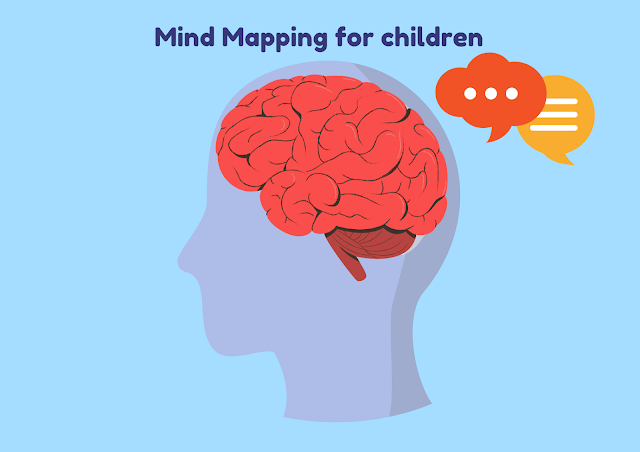
Tony Buzan, a famous writer and teacher, came up with something called "mind maps." When Tony was a kid, he felt bored in school and didn't understand why he couldn't use colors when taking notes. So, he wrote a book called "Mind Maps for Kids" where he talked about how helpful mind maps can be. He discovered that using colors and pictures can make it easier for students to understand things. That's why he created mind maps as a new way to learn, using colors and images to make learning more fun and exciting. Mind mapping  Brain researchers have discovered that the brain has a circular information-gathering process. A mind map serves as a tool for children or adults to think in a circular manner, enabling them to identify connections and associations between different pieces of information. Mind mapping is a helpful technique that can be used by children to organize their thoughts and ideas. It involves creating a visual representation of information, ...

How to avoid screen time in babies and transform it into skill building time

Image
Too much time spent in front of screens can harm babies' development and well-being. Here are some reasons, supported by research and statistics, as to why limiting screen time for babies is crucial.                                                                                       Cognitive Development Research shows that excessive screen time during the first years of life can hinder language development, attention span, and problem-solving skills. A study conducted by the University of Toronto found that every hour of daily screen time between 2 and 3 years of age was associated with a 6% decrease in expressive speech development. Chart (based on hypothetical data)     Social Interaction and Emotional Well-being Babies learn crucial social skills by observing ...

"Supercharge Your Child's Potential: Fun and Educational Skill-Building Activities for Kids!"

Image
Skill-building activities are enjoyable and engaging games or exercises that assist babies in learning and developing new abilities. These activities provide opportunities for babies to explore their surroundings, enhance their sensory experiences, and practice various physical and cognitive skills. Here are Some skill-building activities for kid's developments. 🏵️ Tummy Time: Encourage your baby to spend time on their tummy to strengthen their neck, shoulder and core muscles. Place colorful toys or a mirror within reach to engage their attention. 🏵️ Sensory Play: Provide a variety of safe, textured objects and materials for your baby to explore with their senses. This could include different fabrics, water play, soft toys, or textured balls. 🏵️ Interactive Songs and Rhymes: Sing songs and recite rhymes with actions to promote language development and coordination. Incorporate hand gestures and movements to engage your baby's attention. 🏵️ Mirror Play: Show your baby their ...

6 Self-regulation skills for toddlers

Image
What is self-regulation for toddlers? Self-r egulation for toddlers means they can handle their emotions, control their behavior, and make good choices. It involves recognizing and understanding their feelings, managing their reactions, and dealing with everyday challenges. Self-regulation helps toddlers handle frustration, interact well with others, and develop emotional control. It's an important part of their emotional growth and sets the stage for future self-control and well-being. At what age toddler learn self-regulation Toddlers begin learning self-regulation around 1 to 2 years old. Self-regulation is the ability to control emotions, behavior, and impulses. It's a gradual process that continues developing as they grow. Parents and whoever take care of child play an important role in helping toddlers learn self-regulation skills. With time and support, toddlers become better at managing their emotions and actions. Why Self-regulation is important for toddlers? Se...

Popular posts from this blog

HOW TO TEACH PHONICS: A STEP-BY-STEP EASY GUIDE FOR PARENTS AND TEACHERS

Mastering Sentence Structure: Unleash Your Child's Linguistic Skills with Simple Training Techniques

Engaging Activities for Kids' Emotional Development

Why my toddler wants something then doesn't want it

6 Self-regulation skills for toddlers

5 Ways to understand and Encourage Positive Behavior in children

How Authoritative Parenting Style Transforms Mental Health In Children